
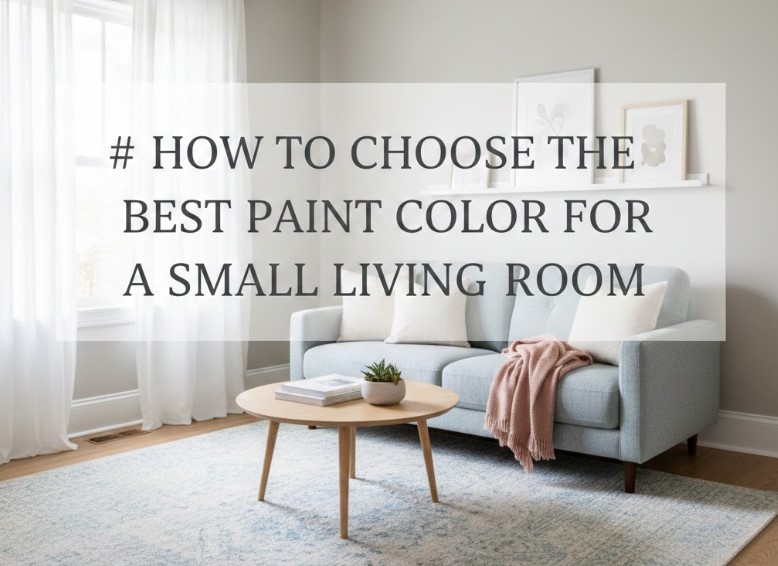
The quest for how to choose the best paint color for a small living room often begins with uncertainty, but it should end with confidence and a dramatically improved space. The key to successful small-space design is leveraging color theory to counteract the physical constraints of the room.
The wrong color can absorb light, highlight awkward corners, and make the ceiling feel low. The right color, however, reflects light beautifully, blurs the lines between walls, and draws the eye outward and upward.
We will explore the three main color strategies to help you pinpoint the perfect palette that fits your style and spatial needs. Preparing your small living room for a stunning paint transformation requires thoughtful consideration of existing furnishings, natural light sources, and the overall mood you wish to cultivate.
It’s the question that has stumped countless homeowners and renters: How to choose the best paint color for a small living room? When space is at a premium, the paint you select isn’t just a backdrop; it’s a critical tool for shaping light, influencing mood, and, most importantly, creating the illusion of greater size.
This isn’t just about picking a shade you like; it’s about strategic design. If you’ve ever felt trapped by four walls that seem to be closing in, this ultimate guide will transform your approach to color selection, turning your cozy room into a bright, airy haven.
Forget the myth that only plain white works, we’re diving deep into the psychology of color to maximize every square inch of your cherished living area.
The Cardinal Rule: Light Reflection Value (LRV) and Small Spaces
The concept of Light Reflection Value (LRV) is the single most critical factor to master when trying to understand how to choose the best paint color for a small living room. It transcends simple aesthetics, acting as a quantitative, scientific measurement that predicts a color’s performance in a low-light, restricted space.
Rather than relying on gut feeling, savvy designers use LRV as a non-negotiable metric to ensure their chosen shade actively works to maximize the perceived size and brightness of the room.
By strategically selecting colors with a high LRV, you effectively enlist the paint itself as an ally in fighting the feeling of confinement, ensuring that every watt of natural or artificial light is utilized to its fullest potential.
Understanding the LRV Scale and Its Range
The LRV scale is a standardized, industry-wide metric that quantifies a paint color’s ability to reflect visible light, expressed as a percentage from 0 to 100.
0 represents an absolute black, a theoretical color that absorbs all light and reflects none, although in practical paint formulation, the lowest LRV is generally around 5-8.
Conversely, 100 represents a perfect reflector, typically associated with a pure, bleached white. Most commercially available paint colors fall somewhere between these extremes.
Knowing where a specific color sits on this scale is vital for small living rooms because it provides an objective measure of how much light the color will contribute to the space.
It allows you to bypass guesswork and select a shade with verifiable brightening capabilities, making the process of determining how to choose the best paint color for a small living room much more analytical and reliable.
The Direct Correlation Between High LRV and Perceived Space
For rooms where the goal is to make them feel larger and airier, the general rule is to seek out colors with a high LRV, typically 60 or higher. The reason for this recommendation is rooted in optics: a higher LRV means the paint is reflecting a greater percentage of the ambient light back into the room. This reflected light has two powerful effects on perception.
Firstly, it boosts the overall illumination, making the room brighter. Secondly, and more importantly for small spaces, the reflected light blurs the hard edges and corners of the room. When light hits a high-LRV wall and bounces back, the eye struggles to define the exact boundary of the surface, causing the walls to visually recede.
This illusion of recession is the primary mechanism by which a high-LRV color achieves the sought-after effect of expansion, effectively fooling the brain into perceiving a larger physical area than actually exists, which is the core principle behind successfully answering how to choose the best paint color for a small living room.
The Strategic Use of Low LRV Colors (The Dramatic Cave Effect)
While high LRV colors are the conventional wisdom for expansion, colors with a low LRV (below 40) should not be entirely dismissed, as they can be used strategically to achieve a dramatically different, yet equally intentional, spatial effect.
When a deep color, such as navy blue, charcoal gray, or forest green, is applied to all the walls of a small living room, it creates what designers often call the “jewel box” or “dramatic cave” effect.
Because low-LRV colors absorb most of the incoming light, the corners and edges of the room are plunged into shadow. Similar to the high-LRV effect, this blurring of boundaries makes it difficult for the eye to locate the walls, but instead of making them recede and expand, the darkness creates a sense of continuous depth and intimacy.
The room becomes a sophisticated, enveloping haven, emphasizing coziness and eliminating visual clutter, a bold alternative to the brightness approach when deciding how to choose the best paint color for a small living room.
How Lighting Conditions Impact LRV Effectiveness
It is crucial to understand that LRV measures potential reflectance, but the actual performance of the color depends entirely on the light source.
A high-LRV paint in a windowless room or a room facing north (which receives cool, dim light) will reflect less light than the same high-LRV paint in a south-facing room flooded with intense sunlight. Therefore, when you check the LRV, you must also consider the room’s natural light exposure.
In poorly lit spaces, you need the absolute highest LRV possible (often 75 or above) just to achieve a bright look, whereas in sunny rooms, you might be able to drop the LRV slightly lower (to the 60 range) while still achieving a feeling of spaciousness.
The interplay between the fixed LRV rating of the paint and the variable quality of the light is what ultimately determines the success of your small space paint choice, a key consideration for anyone grappling with how to choose the best paint color for a small living room.
Integrating LRV with Undertones and Hue Selection
The LRV is a number, but the actual hue and undertone of the paint determine the quality of the reflected light. For instance, two colors might both have an LRV of 70, but one is a cool blue-gray and the other is a warm pink-beige.
In a small, north-facing room, the cool blue-gray will reflect light that feels icy and possibly unwelcoming, despite its high LRV.
The warm pink-beige, however, will reflect light with a warming, comforting glow, counteracting the cool cast of the natural light and making the space feel more inviting while maintaining the sense of openness provided by its high LRV.
Therefore, after confirming a suitable high LRV, the final step in determining how to choose the best paint color for a small living room is to select the correct undertone to complement the room’s specific natural light temperature, ensuring the reflected light is both plentiful and pleasant.
The Power of Light in Understanding Natural Exposure
When tackling the challenge of how to choose the best paint color for a small living room, ignoring the room’s natural light exposure is a costly mistake. Light isn’t a static element; it’s a dynamic, ever-shifting force that drastically alters how a paint color is perceived throughout the day.
The color that looks perfect on a small sample chip under a store’s fluorescent light will be completely transformed by the quality, intensity, and temperature of the sun’s rays entering your specific window.
Understanding your room’s orientation (North, South, East, or West), is the indispensable first step in color selection, as it dictates the color’s undertone and LRV performance, ensuring your chosen shade enhances the light rather than fighting against it.
A well-chosen color should look flattering at all hours, creating a consistent and inviting atmosphere in your small living room.
The Unique Challenge of North-Facing Rooms
North-facing rooms present the toughest lighting challenge because they receive cool, indirect light throughout the entire day, with little to no direct sunlight penetration.
This light is often characterized by a subtle blue or gray cast, which tends to amplify the cool undertones of any paint color used. If you select a paint that already leans cool, the room can end up feeling surprisingly cold, sterile, and shadowed, especially during winter months or on cloudy days.
To effectively address how to choose the best paint color for a small living room facing north, the strategic solution is to select warm-toned neutrals.
These include creamy whites, soft beiges, warm greiges (gray with strong beige undertones), or pale colors with hints of yellow or pink. These warm undertones work actively to counteract the cool, blue cast of the northern light, reflecting a cozier, more inviting glow back into the space and preventing the small living room from feeling frigid or dull.
Harnessing the Intensity of South-Facing Rooms
South-facing rooms are the easiest to paint because they are blessed with the most consistent, intense, bright, and warm light throughout the majority of the day. This abundant sunlight means that colors in a south-facing room will appear warmer, brighter, and more saturated than they would elsewhere.
The heat and intensity of the light can sometimes be overwhelming or even make whites appear slightly yellow. Therefore, the best approach for how to choose the best paint color for a small living room with a southern exposure is often to leverage cooler tones to balance the inherent warmth of the light.
Soft blues, refreshing mint or sage greens, and cool-toned grays (those with blue or violet undertones) will look crisp and clean without becoming icy.
Even if you choose a white, a pure or cool white will look vibrant and clean, whereas a warm white might appear overly creamy or yellowed under the constant barrage of warm sunlight. The strong light allows you the flexibility to use colors with a slightly lower LRV without sacrificing brightness, though keeping it high is still best for maximum spaciousness.
Managing the Transition in East-Facing Rooms
East-facing rooms offer a dramatic shift in light quality over the course of the day, demanding a versatile and balanced color choice. These spaces receive beautiful, bright, golden-warm light in the morning, which can make colors look vibrant and happy.
However, as the sun passes midday, the light quickly turns cooler and dimmer for the afternoon and evening. A color that looks brilliant at 8 AM might look flat, gray, or drab by 4 PM.
When considering how to choose the best paint color for a small living room in this orientation, the key is balance: avoid anything too warm (which will be over-saturated in the morning) or anything too cool (which will be dull in the afternoon).
Balanced neutral colors like a true greige (equal parts gray and beige) or a complex white with neutral undertones are ideal.
These colors hold their integrity in both warm and cool lighting. Alternatively, embrace the morning light with a soft, cheerful color, accepting that the room will transition into a cozier, lower-lit haven in the evenings.
Navigating the Evening Glow of West-Facing Rooms
West-facing rooms present the opposite challenge of their eastern counterparts. They typically receive cooler, weaker, and dimmer light in the morning, making them feel shadowed and cool.
However, the late afternoon brings the spectacular “golden hour” light, which is intense, direct, and often casts a fiery orange or red hue into the room until sunset. This late-day blast of warm light is the defining characteristic you must design around.
For the best result on how to choose the best paint color for a small living room facing west, it’s often wise to choose a light-to-medium neutral that leans slightly cool; such as a soft, silvery gray or a pale, understated blue.
This subtle coolness will temper the fierce warmth of the late afternoon sun, preventing the room from feeling overheated or overwhelmingly orange.
Furthermore, because these colors are cool, they look refreshing and elegant even during their dimmer morning hours. Avoid strong yellows or oranges, which will be amplified to a startling degree during the golden hour, making the small space feel overly aggressive.
The Essential Step of Full-Day Observation and Sampling
Regardless of the orientation, the theoretical assessment of light must always be confirmed with practical observation.
The absolute final step before committing to gallons of paint is to purchase samples and paint large swatches (at least 2 feet X 2 feet) on two different walls in your small living room. You must then observe these swatches over a full 24-hour cycle. This critical step reveals the true performance of the paint:
- Morning Light: Does it look dull or vibrant?
- Noon Light: Does it look washed out or perfectly balanced?
- Evening/Golden Hour Light: Does it cast an odd shadow or an unflattering glow?
- Artificial Light: How does it react to your lamps and fixtures, as artificial light introduces its own color temperature (warm yellow or cool white)?
Only by witnessing the color’s interaction with the entire spectrum of light conditions, from the blue dawn to the warm lamp glow, can you truly confirm the best paint color choice for your small living room.
The Three Winning Strategies for Small Living Rooms
Successfully determining how to choose the best paint color for a small living room boils down to selecting one of three proven, distinct strategies.
Each approach uses color and light manipulation techniques to achieve a specific spatial and emotional effect, moving beyond simply picking a color you like to implementing a cohesive design plan.
Your choice among these three paths (The Light and Bright Strategy, The Monochromatic Masterpiece, or The Bold and Dramatic Move), should be guided by your ultimate goal.
Do you prioritize maximizing the feeling of size, creating a harmonious and seamless flow, or cultivating an intimate, cozy atmosphere? Choosing your strategy first ensures every subsequent decision, from hue to sheen, aligns with the intended outcome for your cherished small space.
1. The Light and Bright Strategy (The Expander)
This is the most time-tested and universally recommended method when the primary objective is to visually maximize the size and illumination of a small living room.
The strategy hinges on selecting colors with a high Light Reflection Value (LRV), typically 70 and above, to actively bounce light around the space. These colors include pure, clean whites, off-whites with barely perceptible undertones (like soft cream or linen), and ultra-pale pastels (such as barely-there blue or mint).
The effectiveness of this approach lies in its ability to blur boundaries. When walls are saturated with light-reflecting color, the corners and edges of the room recede into the perceived brightness, making it difficult for the eye to register the room’s physical limits.
Furthermore, this expansive effect is significantly enhanced by utilizing the same light color on the ceiling and trim, ideally with a subtle change in sheen (e.g., matte on walls, semi-gloss on trim).
This seamless application eliminates jarring visual breaks, pulling the eye effortlessly across the surfaces and upward, giving the illusion of significantly higher ceilings and broader walls, essential considerations when figuring out how to choose the best paint color for a small living room.
2. The Monochromatic Masterpiece (The Cohesion Creator)
The monochromatic strategy offers a sophisticated and calming alternative to the stark brightness of high-LRV schemes, focusing instead on creating depth, harmony, and visual quietude. This method employs a single dominant color family, often in the medium LRV range (45 to 65), such as a mid-tone gray, a muted sage green, or a dusty blue.
The power of this approach in a small living room lies in the absence of high-contrast changes that typically “chop up” a space and emphasize its smallness.
Instead of contrasting, you layer different shades, tones, and textures of that single hue across all elements: walls, furniture, textiles, and accessories.
For example, walls might be a medium smoky gray, the sofa a lighter, textured silver-gray linen, and the rug a darker charcoal pattern. Because the eye encounters no jarring shifts in color, it flows smoothly across the space, perceiving an unbroken, continuous design field.
This technique eliminates visual clutter and creates a cohesive, enveloping atmosphere, successfully tackling how to choose the best paint color for a small living room by trading extreme visual expansion for elegant, seamless unity, making the room feel thoughtfully designed rather than simply constrained.
3. The Bold and Dramatic Move (The Deceptor)
This strategy is the rebellion against conventional small-space rules and is perfect for homeowners who prefer a cozy, intimate, and sophisticated ambiance over airy brightness. This move utilizes low LRV colors (typically 10 to 35), such as rich navy, deep charcoal, emerald green, or even black.
The success of this strategy in a small living room relies on the principle of boundary dissolution through shadow. When deep, saturated colors are used, they absorb most of the available light, plunging the corners, edges, and often the ceiling line into shadow.
This blurring effect prevents the eye from accurately determining where the walls begin or end, creating a sense of enveloping infinity, or the “jewel box” effect. To prevent the space from feeling oppressive, this dark canvas must be punctuated by crisp, reflective accents.
Think bright white trim, high-sheen metallic accessories (like brass lamps or silver mirrors), and light-colored anchor furniture (a cream sofa or a light wood table).
These high-contrast elements reflect the limited light back into the room and provide necessary visual anchors, elevating the drama and transforming the room into an elegant, intimate retreat, providing a striking answer to how to choose the best paint color for a small living room for those seeking depth rather than visual distance.
Your Final Checklist for Choosing the Best Paint Color
Before you dip your brush, run through this quick, actionable checklist to ensure your choice is the best one for your unique small living room:
- Determine Your Light Source: Is the room North, South, East, or West facing? (Choose warm undertones for cool light, and cool undertones for warm light).
- Establish Your Goal: Do you want the room to feel Bigger, Cozy, or Dramatic? (This dictates your primary color strategy).
- Check the LRV: If maximizing space, select a color with an LRV of 60 or higher.
- Test the Color: Paint swatches on two different walls and observe them over a full day (morning, noon, evening) with both natural and artificial light.
- Choose the Sheen: Use a matte finish for walls to hide imperfections and promote visual continuity, reserving semi-gloss for trim.
- Apply the 60-30-10 Rule: Plan your primary wall color, secondary upholstery color, and accent colors to ensure balance and prevent visual clutter.
Choosing the best paint color for a small living room is a layered process, but the results are truly transformative. By moving beyond simple aesthetics and embracing the physics of light and color, you are now equipped to select a shade that not only looks beautiful but fundamentally changes how your living space feels, making your small room the most loved, airy, and inviting space in your home.