
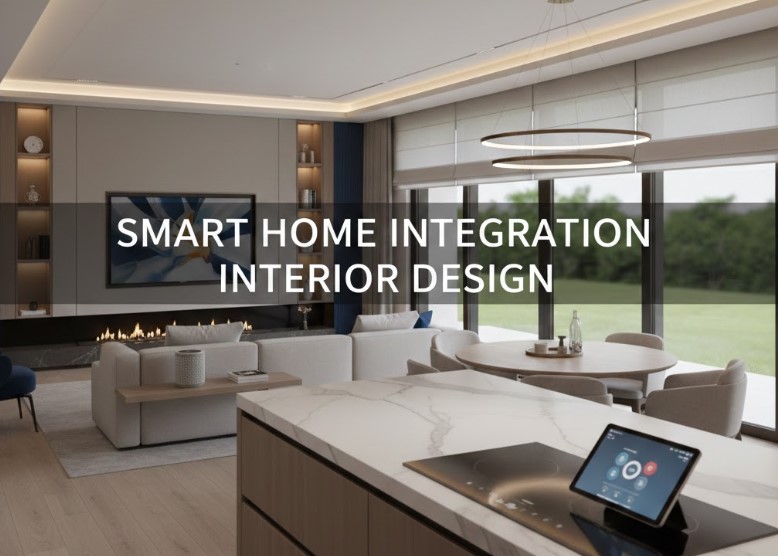
The convergence of technology and aesthetics is rapidly redefining modern living, and at the forefront of this movement is Smart home integration interior design.
This sophisticated approach goes far beyond simply placing a smart speaker in a room; it is a holistic philosophy that seamlessly weaves intelligent systems into the very fabric of a home’s architecture and decor, creating living spaces that are intuitive, beautiful, and profoundly efficient.
For homeowners and designers alike, understanding this fusion is no longer optional, it is essential for crafting truly future-ready environments.
The key is in the integration, ensuring that technology functions as an invisible assistant, enhancing comfort, security, and sustainability without ever compromising on style.
The beauty of contemporary Smart home integration interior design lies in its commitment to invisibility, ensuring that complex automation systems enhance the user experience while maintaining a clean, clutter-free aesthetic.
A poorly integrated smart home is a gadget-filled space dominated by screens and wires; a successfully integrated smart home feels like magic, where the environment simply knows what you need.
Imagine walking into your living space, and the lights gently adjust to a warm evening glow, the temperature settles precisely to your preferred 21.5°C, and your favorite ambient music begins to play; all without you touching a switch or issuing a single command. This level of anticipatory comfort is the promise of truly unified smart design.
Blending Tech and Decor in Aesthetic Harmony
The successful integration of technology into living spaces hinges on achieving a perfect Aesthetic Harmony, ensuring that the functional necessity of smart home devices never compromises the overall design integrity.
This blend elevates the home from a mere collection of gadgets to a sophisticated, cohesive environment where technology serves as an invisible, enhancing force.
Architectural Camouflage: Weaving Tech into the Structure
Architectural Camouflage is the definitive technique in achieving seamless Smart Home Integration Interior Design, transforming the home’s structure itself into the housing for technology.
This goes far beyond merely hiding wires; it involves collaborative planning between architects, interior designers, and technology integrators to pre-plan recesses, pockets, and specific materials that accommodate devices perfectly.
For instance, sensors (like those for motion, light, or temperature) are not affixed to the wall but are instead placed within the ceiling plenum, behind discreet ventilation grilles, or flush-mounted into custom trimwork, making them practically invisible to the casual observer.
Similarly, modern keypads used to control lighting and scenes are designed to sit perfectly flush with the drywall or millwork, often customized with finishes (such as matte black, bronze, or wood veneer) that match the adjacent surface material.
This dedication to integrating the technology during the construction or renovation phase ensures that the final look is clean, deliberate, and maintains the architect’s original vision, making the technological complexity vanish.
The result is a space where the control of the environment feels innate and magical, rather than dependent on visible, bolted-on hardware.
Smart Furniture: Form and Function in Unity
The evolution of furniture from static objects to dynamic, Smart Furniture represents a pivotal trend in harmonious design, merging form and essential technological function into single, beautiful pieces.
This concept eliminates the need for peripheral gadgets, cords, and clutter. Consider a high-end nightstand: it may feature a built-in, Qi-certified wireless charging surface discreetly embedded beneath the veneer, along with integrated USB-C ports hidden within a drawer, negating the visual disruption of charging cables draped across the surface.
Living room pieces like media consoles can be meticulously designed to not only house the central components (such as receivers, hubs, and media servers) in a climate-controlled cabinet but also to incorporate hidden, downward-firing speakers that deliver rich audio without a visible grille.
Furthermore, tables and desks are increasingly including integrated, pop-up power grommets or kinetic adjustments that change the height and angle via voice command.
This approach ensures that the technology the homeowner needs is always at hand and functional, yet completely disappears when not in use, solidifying the principles of Smart home integration interior design by prioritizing both utility and a high-end aesthetic.
Invisible Entertainment: Disappearing Audio-Visual Systems
Invisible Entertainment is critical for maintaining a clean, minimalist aesthetic in living rooms and media spaces, challenging the traditional dominance of large, black screens and visible speaker boxes.
In high-end Smart Home Integration Interior Design, televisions are frequently mounted on motorized lifts that descend from the ceiling or ascend from a custom-built cabinet, remaining entirely out of sight until activated.
For spaces where a fixed screen is required, technologies are employed where the display can look like a piece of custom-framed artwork or a mirror when turned off, preserving the room’s decor.
The greatest strides, however, are in audio integration: high-fidelity speakers are commonly installed flush into the ceiling or walls, often concealed behind specialized acoustically transparent fabric or finished grilles that are painted to match the surrounding wall color perfectly.
More advanced systems utilize ‘stealth’ technology, where transducers are plastered over and finished to blend seamlessly with the drywall, turning the wall panel itself into a high-performance speaker surface.
This meticulous concealment ensures that the auditory and visual experience is immersive, cinematic, and entirely decoupled from the presence of disruptive hardware, upholding the design’s focus on elegant simplicity.
Materials and Finishes: A Cohesive Sensory Experience
The selection of Materials and Finishes for any visible technological component is vital to the success of harmonious Smart Home Integration Interior Design, bridging the gap between cold electronics and warm living spaces.
Designers are moving away from glossy plastics toward more tactile, complementary materials. For instance, smart speaker housings may be wrapped in woven acoustic fabric or incorporate natural elements like wood or polished stone bases, allowing them to resemble high-end decorative objects rather than tech gadgets.
Control keypads or smart thermostat surrounds can be custom-ordered or framed in materials such as brushed brass, oil-rubbed bronze, or solid walnut to complement hardware fixtures, door handles, and millwork in the room. This extends the material palette of the interior design directly onto the device, unifying the look.
Furthermore, in environments like kitchens, flush-mounted touch screens might use anti-glare, fingerprint-resistant glass with metal frames that mirror the appliance finishes.
By treating even the smallest interface as a deliberate piece of décor and carefully matching its texture and color to its surroundings, the technology ceases to be an alien element and becomes an integral, visually soothing part of the curated environment.
Custom Bezels and Frames: Personalizing the Interface
Utilizing Custom Bezels and Frames is a detailed yet powerful technique for incorporating digital interfaces and screens into the aesthetic scheme of Smart Home Integration Interior Design.
This method acknowledges that some technology, such as smart thermostats, digital photo displays, or wall-mounted control tablets, must remain visible for frequent interaction.
Instead of simply mounting a standard device, designers commission custom frames or bezels that are specifically crafted to fit the chosen technology.
These frames can be made from the same wood, stained with the same finish, or painted the exact color (using a color-matching system) as the surrounding trim, walls, or built-in cabinetry. This elevates the device from a functional necessity to a thoughtfully designed feature.
By integrating the screen’s frame into the wall’s material palette, the focus shifts away from the electronic nature of the device and toward its function as a central information point or a piece of digital art.
This personalization ensures that even the most frequently used smart home controls become extensions of the interior decor, thereby minimizing visual noise and maximizing the feeling of a cohesive, intentional design.
The Connected Ecosystem: Beyond Individual Devices in Smart Home Integration Interior Design
In the realm of Smart Home Integration Interior Design, the true intelligence and luxury of a space emerge when individual devices transcend their isolated functions and operate as a unified, connected ecosystem.
This shift from ‘smart gadgets’ to a ‘smart home’ is orchestrated by a central control system that allows different subsystems, lighting, climate, security, and entertainment, to communicate and cooperate, delivering a level of convenience, efficiency, and personalization that defines modern, high-end living.
Intelligent Lighting Control: Orchestrating Ambiance and Wellness
Intelligent Lighting Control represents one of the most visible and impactful aspects of the connected ecosystem in Smart Home Integration Interior Design, transforming simple illumination into a dynamic design element and a wellness tool.
Beyond basic dimming and switching, a fully integrated system is capable of sophisticated scene setting where a single command can trigger a complex, multi-layered adjustment across all light fixtures, window treatments, and even music.
For example, a “Focus Mode” scene could adjust task lighting to a bright, cool white (4000K) for concentration while slightly lowering ambient fixtures, all while closing the window shades halfway to reduce screen glare.
Furthermore, advanced systems incorporate circadian rhythm programming, automatically adjusting the light color temperature and intensity throughout the day to align with the body’s natural sleep-wake cycle.
The light transitions from warm, low-intensity amber tones in the evening to stimulate melatonin production, to bright, cool blue-white light in the morning to enhance alertness.
This integration makes the lighting system an active, health-promoting component of the home, subtly improving the occupants’ well-being without requiring constant manual adjustment, all managed seamlessly through a centralized control platform that simplifies complexity into elegant simplicity.
Climate and Air Quality Management: Holistic Comfort and Efficiency
Integrating Climate and Air Quality Management into the smart home ecosystem goes far beyond the functionality of a standalone smart thermostat; it creates a holistic, anticipatory environment that optimizes comfort while drastically reducing energy consumption.
This interconnected system leverages multiple data points, including occupancy sensors, outdoor weather reports, and indoor air quality (IAQ) monitors, to make real-time decisions.
For instance, Zoned Systems allow the central hub to communicate with smart vents and dampers to deliver precise temperature control to only the occupied areas of the home, minimizing energy waste.
If the system detects that a large group has gathered in the kitchen, its humidity and temperature sensors will signal the HVAC system to increase cooling and ventilation proactively, maintaining a comfortable environment before occupants even notice a change.
Moreover, the integration of IAQ monitoring means that high levels of volatile organic compounds (VOCs) or excessive humidity can automatically trigger the activation of integrated air purifiers or whole-house dehumidifiers.
This constant, automated monitoring and adjustment contribute significantly to the property’s energy efficiency profile and, more importantly, create a healthier, more consistent indoor climate, a hallmark of sophisticated Smart Home Integration Interior Design.
Integrated Security and Access: Invisible Protection and Seamless Entry
The integration of Integrated Security and Access within the connected ecosystem shifts security from a visible deterrent to a seamless, intelligent layer of protection that blends perfectly with modern Smart Home Integration Interior Design.
The system connects smart locks, video doorbells, motion sensors, and security cameras under a single control system, allowing them to work together in powerful ways.
For example, when an occupant uses a biometric fingerprint scan on the smart lock to enter, the security system automatically disarms, the lights in the foyer transition to a “Welcome” scene, and the climate control returns from its “Away” setback mode to the preferred “Home” setting.
If a hidden contact sensor detects an attempted forced entry, the system doesn’t just sound an alarm; it can be programmed to flash all interior and exterior lights rapidly, stream the video feed from the nearest camera directly to the homeowner’s phone, and automatically lock all other exterior doors.
This coordinated response, which leverages multiple subsystems (lighting, security, and access control), provides a much more robust and proactive level of protection than any standalone alarm system, all while ensuring that the necessary hardware remains discreetly concealed or aesthetically complementary to the architectural design.
Unified Control and Automation: The Intelligence Layer
The core principle that binds the connected ecosystem in Smart Home Integration Interior Design is Unified Control and Automation, which serves as the intelligence layer for the entire home.
This layer is often managed by a central processor or hub that hosts the home’s automation software, translating complex schedules, sensor data, and user commands into coordinated actions across all subsystems.
Automation routines are built upon logical ‘if-this-then-that’ rules: If the sun sets and the security system is armed and the house is empty, then close all automated blinds, dim the exterior security lighting to 50%, and put the HVAC system into “Night/Away” mode.
This level of comprehensive programming allows the home to manage hundreds of operations daily without any input from the user, ensuring optimal performance and efficiency.
Control is simplified through a single interface, whether it’s an elegant wall-mounted touchscreen, a smartphone app, or voice command, which eliminates the need to interact with separate apps for lights, music, and climate.
This simplification of interaction is crucial, as it transforms the complex underlying technology into an experience of effortless living, the ultimate measure of successful Smart Home Integration Interior Design.
Future-Proofing and Data Interoperability: Ensuring Longevity
The final consideration in a connected ecosystem is Future-Proofing and Data Interoperability, which ensures the longevity and adaptability of the Smart Home Integration Interior Design investment.
This involves selecting control platforms that communicate using open standards or widely supported protocols (like Zigbee, Z-Wave, or IP-based networks) and ensuring the installation includes a robust, high-bandwidth wired network backbone (like CAT6a or fiber).
This forward-thinking infrastructure allows the central automation system to easily integrate new devices and services as they emerge without requiring a complete system overhaul.
Furthermore, the system is designed to handle the massive amounts of data generated by all interconnected sensors, from energy usage to occupancy patterns. This data is not just stored, but intelligently analyzed by the central hub to further refine and customize automation routines, making the home smarter and more responsive over time.
Choosing systems known for their commitment to backward compatibility and continuous software updates protects the homeowner’s initial investment and guarantees that the integrated design remains cutting-edge and relevant for years to come.
Best Practices for Successful Smart Home Integration Interior Design
Achieving truly successful Smart Home Integration Interior Design demands a systematic, collaborative, and forward-thinking approach.
It moves beyond simply buying and installing devices; it requires a set of best practices that prioritize the user experience, professional collaboration, and technological longevity.
Start with the User Experience
The paramount best practice is to Start with the User Experience (UX), which means defining the lifestyle, habits, and specific needs of the occupants before any technology is selected or wired. A successful smart home serves the people living in it, rather than forcing them to adapt to the technology.
Designers must conduct in-depth consultations: Do the homeowners entertain large groups frequently? Do they work from home and require focus zones? Are they focused on health, wellness, and circadian lighting?
For a busy professional couple, the priority might be a seamless “Good Morning” routine that automates lighting, opens blinds, and starts the coffee maker at a specific time.
For a family with children, the focus might be on security, safe access control, and robust, zoned entertainment. Documenting these requirements, including desired control methods (voice, app, keypad, or automation), creates a Statement of Requirements (SOR).
This document acts as the guiding principle for all design and integration decisions, ensuring that every piece of technology selected directly addresses a real-world user need and contributes to a smoother, more intuitive living environment, which is the ultimate measure of effective Smart Home Integration Interior Design.
Plan Early and Collaboratively
Effective Smart Home Integration Interior Design is fundamentally a team sport, and the second crucial best practice is to Plan Early and Collaboratively.
Technology integration must not be an afterthought added during the final construction phases; it must be a core consideration during the architectural design and interior material selection processes.
The team must include the Homeowner, the Architect, the Interior Designer, and a specialized Technology Integrator (AV/IT). The Architect and Designer focus on concealment, ensuring recessed speaker housings, wire pathways (conduit), and flush-mount control panels are integrated into the blueprints.
The Integrator advises on the structural requirements for equipment closets, thermal management for centralized components, and power requirements for motorized shades or high-load devices.
For example, knowing the location of a motorized curtain track during the framing stage allows for power and control wiring to be run cleanly to the header, avoiding unsightly external wire runs later.
Early planning also avoids costly change orders and ensures that the finished aesthetic, defined by the interior designer, is maintained by properly concealing all necessary technical infrastructure, reinforcing the integrity of the Smart Home Integration Interior Design.
Prioritize Compatibility and Simplicity: Unified Control
A critical best practice for seamless integration is to Prioritize Compatibility and Simplicity, aiming for a Unified Control platform that manages all subsystems.
A common pitfall in smart homes is the “app sprawl,” where the homeowner needs half a dozen different manufacturer apps to control lights, security, entertainment, and climate, leading to frustration and disuse.
The best-integrated homes operate on a single, robust, professional-grade control system (a central hub) that acts as the brain. This system must be capable of natively communicating with or easily integrating disparate subsystems through standardized protocols.
By choosing compatible components from the outset, the integrator can program complex, cross-system automation routines (e.g., “Press one button, the lights dim, the blinds close, the projector turns on, and the sound bar activates”).
Furthermore, the user interface should be uniform, whether accessed via a wall-mounted touchscreen, a mobile app, or a voice assistant.
This simplicity of interaction is what transforms a complex installation into an intuitive, elegant user experience, making the Smart Home Integration Interior Design feel less like technology and more like personalized ambiance.
Embrace Modular Design: Future-Proofing the Infrastructure
Given the rapid evolution of consumer technology, a key best practice for long-term satisfaction is to Embrace Modular Design and Future-Proof the Infrastructure. While devices themselves may become obsolete, the underlying network and power infrastructure should be built to last and to accommodate change.
This involves two core actions: first, installing a robust network backbone with high-speed, structured cabling (like CAT6a or fiber) run to every conceivable future location for access points, TVs, and keypads, even if a wireless solution is used initially. Second, installing empty conduit in walls and ceilings during the rough-in phase.
This “pipes and wires” strategy ensures that when a new communications standard or a different cable is required years down the line (e.g., upgrading from HDMI to a next-generation video cable, or installing a new type of sensor), the wiring can be easily pulled through the existing conduit without having to cut into walls or ceilings.
By separating the durable, long-lasting infrastructure (conduit, wire pathways) from the rapidly changing components (devices, processors), the Smart Home Integration Interior Design is protected against rapid obsolescence, ensuring the home can adapt gracefully to future technological advancements.
The Seamless Future
The direction of Smart home integration interior design is clear: it is moving toward a highly personalized, predictive, and virtually invisible experience.
As AI continues to advance, our homes will become even more intuitive, anticipating our needs not just based on scheduled times, but on real-time factors like our stress levels, biometric data, or even the subtle nuances of our voice commands.
The ultimate goal of this design philosophy is to create a living environment so perfectly tailored and responsive that the technology running it disappears into the background, leaving behind only the feeling of effortless comfort and unparalleled style.
In essence, Smart home integration interior design is about elevating the art of living. It takes the function of a space, wraps it in beautiful form, and empowers it with intelligence, crafting homes that are not just places to live, but active partners in a sophisticated, modern lifestyle.