
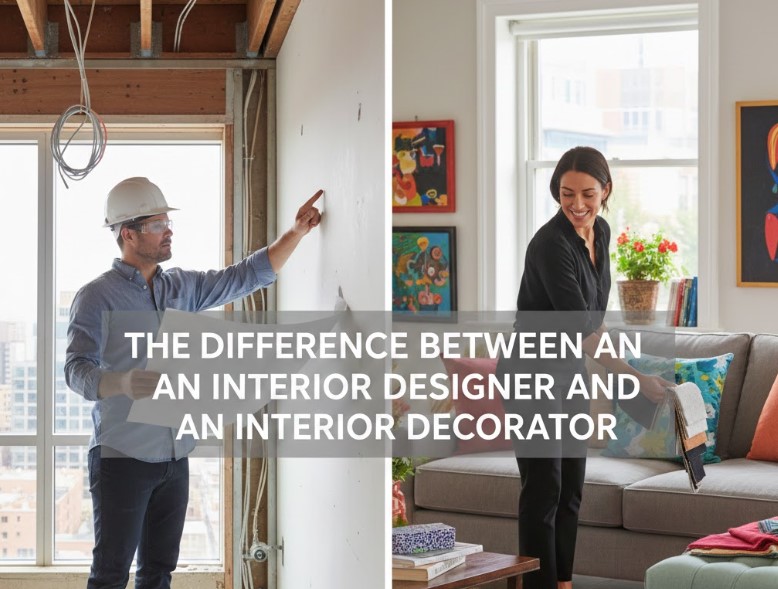
Understanding the difference between an interior designer and an interior decorator is not just about semantics; it is the crucial first step in choosing the right professional for your project, ensuring your investment aligns perfectly with your needs, scope, and vision.
While both professionals work to enhance the look and feel of an interior space, their training, scope of work, legal liabilities, and core competencies diverge significantly, often impacting the structural and functional elements of a building.
Choosing the wrong expert can lead to frustration, costly rework, or even safety issues, making this knowledge paramount for any homeowner or business owner.
This often-confused terminology is where many people stumble, mistaking one role for the other when, in fact, they operate on entirely different levels of the construction and aesthetic spectrum.
The primary difference between an interior designer and an interior decorator boils down to education, regulation, and involvement with the building’s structure. An interior designer often has formal education, may require licensing, and works with architects and contractors on structural changes, building codes, and floor plans.
An interior decorator, on the other hand, focuses exclusively on the surface aesthetics, the non-permanent elements that give a room its character, personality, and final polish.
We can look at this distinction through the lens of a house: the designer lays the foundation and builds the walls (metaphorically speaking, in terms of interior architecture), while the decorator furnishes and paints those walls to make them beautiful and livable.
Education, Certification, and Formal Training: The Foundations
The core distinction that separates an interior designer from an interior decorator is rooted deeply in their foundational knowledge; specifically, their education, certification, and the subsequent legal and professional responsibilities they hold.
These three pillars establish the scope of work and the technical expertise each professional can offer, making them the most critical factors when clients are determining the best fit for their project. Understanding these training paths is key to appreciating the difference between an interior designer and an interior decorator.
Formal Academic Degrees and Interior Architecture
The journey to becoming a professional interior designer typically begins with a rigorous, multi-year academic program, usually a Bachelor of Arts (B.A.) or Bachelor of Science (B.S.) degree in Interior Design or Interior Architecture, and sometimes an advanced Master’s degree.
This formal educational requirement sets the stage for the depth of knowledge an interior designer possesses, extending far beyond aesthetic choices. Their curriculum is heavily focused on the science and safety of the built environment.
Students are immersed in subjects such as spatial planning, building systems (HVAC, electrical, plumbing), material science, construction methods, and computer-aided design (CAD) and Building Information Modeling (BIM).
This training ensures that an interior designer can not only envision a beautiful space but also technically execute the design, communicate effectively with architects and engineers, and produce comprehensive technical drawings and construction documents that dictate how a space will be built or modified.
This foundational, architectural-focused education is one of the most significant factors in establishing the difference between an interior designer and an interior decorator.
Professional Certification and Licensing Requirements
For an interior designer, the completion of a degree is often just the prerequisite to the most crucial step: professional certification and licensing.
In many jurisdictions, particularly for projects involving public safety, commercial spaces, or significant structural modifications, a designer must pass a standardized, comprehensive examination to legally practice and use the title “Interior Designer.”
The most prominent example is the National Council for Interior Design Qualification (NCIDQ) Examination in North America. This exam tests a candidate’s knowledge of public health, safety, and welfare (PHSW) issues, including complex areas like building codes, fire safety egress, barrier-free design (accessibility compliance), and contract administration.
Passing this examination and meeting state or provincial experience requirements allows the designer to apply for an official license or registration.
This licensing grants them the legal authority to stamp and seal construction drawings, underscoring their legal accountability for the safety and integrity of their interior plans.
Conversely, interior decorators are typically not required to be certified or licensed by governmental bodies, as their work is non-structural and does not directly impact public safety, further cementing the fundamental difference between an interior designer and an interior decorator.
The Non-Regulated Path of Interior Decorating
The educational and training path for an interior decorator is far less formal and much more focused on aesthetics, style, and consumer goods.
While many highly successful decorators possess an innate talent and extensive practical experience, they are generally not required to hold a specific academic degree or pass a licensure exam.
Many individuals enter this field through short certificate courses, vocational programs, or by being self-taught through apprenticeships and extensive practical exposure to color theory, textiles, furniture history, and market trends.
The training focuses on developing an exceptional eye for color, scale, texture, and visual balance, and gaining expertise in sourcing and purchasing furniture, art, and accessories.
While a deep understanding of these elements is critical for creating a beautiful and cohesive space, the training does not typically cover structural engineering, code compliance, or construction documentation.
An interior decorator’s expertise remains strictly within the realm of non-fixed, surface-level elements, which is why they operate under a different legal umbrella and do not require the formal regulation that defines a professional interior designer, highlighting the difference between an interior designer and an interior decorator in practice.
The Crucial Role of Building Codes and Technical Knowledge
A critical component of an interior designer’s education is an intensive study of building codes and regulations.
For a designer, this is non-negotiable, as their designs must comply with local, state, and national laws concerning everything from fire ratings of materials and the minimum width of hallways and exits (egress) to the precise requirements for accessibility for people with disabilities (e.g., ADA in the US).
They must understand how to specify materials (e.g., wall coverings, ceiling tiles, fabrics) based on their flammability and smoke-development ratings, particularly in commercial or multi-family residential settings.
This technical, code-driven expertise is what enables a designer to move an interior wall, add a new electrical circuit, or design a custom built-in feature while guaranteeing the space remains safe and passes inspection.
An interior decorator, lacking this formal technical training, would be operating outside their scope to suggest or execute changes that require this level of code expertise, thereby underscoring the legal and safety-focused difference between an interior designer and an interior decorator.
Scope of Work: Where the Rubber Meets the Road
The Scope of Work is arguably the most tangible way clients encounter the difference between an interior designer and an interior decorator. It outlines the professional boundaries, the type of tasks each is qualified to execute, and the stage of the project when their expertise becomes critical.
While the decorator focuses on the visible, movable elements of a finished space, the designer’s mandate extends into the very architecture and functionality of the building, requiring technical skill and coordination with other licensed trades.
Interior Designer’s Involvement in Fixed and Structural Elements
An interior designer’s scope involves the fixed elements of a space, the parts that cannot be easily changed without construction. They are often brought onto a project at the conceptual or schematic design phase, long before any demolition or construction begins.
Their work is heavily focused on the interior architecture, which includes designing or modifying the floor plan to optimize flow, function, and space utilization.
This might involve specifying the placement of new walls, redesigning the layout of a kitchen or bathroom by relocating plumbing lines and electrical outlets, and determining the entire lighting plan, from the placement of junction boxes to the type of fixtures needed for task and ambient lighting.
Furthermore, they select and specify permanent finishes such as built-in cabinetry and millwork, custom stone countertops, and tiling patterns for floors and backsplashes, ensuring these materials meet necessary safety and durability standards.
Their output includes detailed construction drawings and specifications that a contractor uses to build the space, distinguishing their role as a technical one in the difference between an interior designer and an interior decorator.
The Designer’s Focus on Function, Ergonomics, and Code Compliance
Beyond aesthetics, a primary responsibility of the interior designer is to ensure the space is fully functional, ergonomic, and compliant with all relevant building codes.
They are masters of space planning, meticulously analyzing how people will move through and interact with the environment, whether it’s optimizing the work triangle in a residential kitchen or planning efficient circulation paths in a busy commercial office.
This involves deep consideration of ergonomics, ensuring that counter heights, workstation layouts, and furniture clearances are appropriate for human use and well-being.
In a commercial setting or public space, the designer ensures Accessibility Compliance (such as ADA standards in the U.S.), detailing ramps, elevator access, grab bar placements, and accessible counter heights.
Because their plans involve modifications to the fixed structure and systems, they are responsible for adhering to fire codes, egress requirements, and materials-safety regulations.
Their design decisions are not just about beauty but about health, safety, and welfare (HSW), a technical liability that fundamentally defines the difference between an interior designer and an interior decorator.
Interior Decorator’s Role in Moveable and Aesthetic Elements
In sharp contrast, the interior decorator’s scope focuses exclusively on the moveable and aesthetic elements of a finished space. Their involvement typically begins after all construction, painting, and permanent installations are complete, once the designer’s work is done.
The decorator’s goal is to bring personality, comfort, and style to the room. Their work involves the selection of all soft furnishings, including sofas, chairs, beds, area rugs, and decorative lighting (like table and floor lamps).
They specialize in color theory and textile selection, choosing paint colors, wallpapers, drapery fabrics, and upholstery that harmonize with each other and the client’s vision.
Their expertise is vital in accessorizing and styling, which involves curating artwork, selecting mirrors, arranging decorative objects, and styling shelves and surfaces to create a layered, polished, and inviting atmosphere.
The decorator transforms a structurally sound, functional room into a comfortable, visually appealing habitat. Their focus on the final, surface-level presentation (the “dressing” of the room) is a clear and vital part of the difference between an interior designer and an interior decorator.
Managing the Project vs. Managing the Style
The management responsibilities further delineate the two roles. The interior designer is a project manager for the interior architectural scope.
They produce comprehensive Construction Documents (CDs), manage the bid process with contractors, coordinate the installation of fixed elements (like tile and custom millwork), and conduct site visits during construction to ensure the design is being executed correctly and according to code.
They are the client’s technical liaison with the architect, engineer, and general contractor. The interior decorator, however, manages the style and procurement process. Their project management centers on sourcing, purchasing, tracking, and installing all the furniture, art, and accessories.
They handle vendor relations, shipping logistics, and coordinating the final “install day” where the room is put together and styled.
They are experts in market availability, cost management for furnishings, and establishing the overall visual tone. While the designer manages the build, the decorator manages the finish and flair, illustrating the distinct management roles that separate the difference between an interior designer and an interior decorator.
Understanding the Blurry Line of the Collaborative Overlap
While the formal distinctions between training, certification, and scope clearly define the difference between an interior designer and an interior decorator, the reality of the industry, particularly in residential projects, often involves a significant collaborative overlap.
Many professionals wear multiple hats, and the market itself has evolved to blend these functions into comprehensive service models.
Understanding where these lines blur is just as important as knowing where they are drawn, ensuring clients choose a professional with the versatility to handle their project’s entire lifecycle and its various needs.
This practical merging of roles is a frequent source of confusion for clients seeking to differentiate between the services offered.
The Full-Service Designer: Integration of Decoration and Design
A vast majority of highly qualified interior designers do not limit their practice to just the structural and architectural elements; they seamlessly integrate the skills of an interior decorator to offer a full-service, end-to-end client experience.
Once the architectural plans are finalized, the construction is complete, and the fixed elements are installed, the designer typically transitions into the role of the decorator.
They leverage their initial understanding of the project’s foundational goals, client personality, and budget to select all the soft furnishings, décor, window treatments, and artwork.
This unified approach ensures absolute aesthetic cohesion, as the professional who specified the permanent flooring and custom built-ins is the same one selecting the sofa, rug, and lighting that sit atop and around them.
This singular vision prevents the disjointed feeling that can sometimes occur when a project is handed off from a technical designer to an aesthetic decorator, providing a more efficient, streamlined, and aesthetically consistent final result for the client.
Decorator Expertise and Minor Non-Structural Consultation
Conversely, an experienced interior decorator, while legally restricted from making or specifying structural changes, often possesses valuable knowledge that can influence minor non-structural adjustments and functional improvements.
For instance, a decorator may recognize that a room’s functionality is hampered by poor electrical outlet placement, even though they cannot redraw the electrical plan.
In such cases, they may consult with an electrician to add a surface-mounted floor outlet hidden beneath a rug, or suggest a minor relocation of a wall sconce, provided the change is simple and does not violate code.
Similarly, they may be asked to select a new fireplace surround material or advise on the finish of existing stair railings. These tasks involve permanent fixtures but rely primarily on aesthetic knowledge (material texture, color) rather than structural expertise.
The key distinction is that the decorator acts as an advisor on these fixed elements but relies on a licensed contractor or designer to take legal responsibility for the execution.
This advisory capacity demonstrates how a decorator’s aesthetic expertise can touch upon fixed elements, further blurring the practical application of the difference between an interior designer and an interior decorator.
Project Scope Flexibility and Adaptation
The practical scope of a professional’s work is often dictated less by their title and more by the client’s specific project needs and budget. For instance, a client undertaking a cosmetic refresh of a kitchen might hire an interior decorator.
While these materials are “fixed” elements, the work itself is primarily aesthetic and material-selection based, not structural.
In this scenario, the decorator’s expertise in material sourcing, color matching, and design trends is paramount, and they manage the execution through the relevant contractors (e.g., counter installers, cabinet finishers).
Therefore, professionals often adapt their service offerings. A designer may accept a smaller, purely decorating project to fill their schedule, while a skilled decorator may partner with an architect to offer a cohesive service package for a small renovation.
This flexible client-centric approach means titles are sometimes used interchangeably or broadened to encompass both skill sets in marketing.
Hence, making a thorough inquiry into the individual professional’s portfolio, qualifications, and specific liability coverage the most reliable way to discern the true extent of their capabilities, rather than relying solely on the general definition of the difference between an interior designer and an interior decorator.
The Collaboration Model: Designer-Decorator Partnerships
In larger projects, especially those with significant budget and complex aesthetic requirements, it is common for the two roles to work in a formal collaborative partnership.
In this model, the interior designer leads the project from the architectural and technical standpoint: they handle the space planning, structural modifications, selection of fixed materials, and creation of construction documents.
Once the building phase is complete, the interior decorator is brought in specifically to focus on the final layer of furnishing and styling.
This division allows each professional to concentrate on their area of greatest expertise: the designer on safety and function, and the decorator on style and soft goods procurement. This system ensures technical accuracy while achieving a high level of aesthetic polish.
This deliberate teamwork model recognizes and leverages the distinct strengths of each role, ultimately offering the client the highest quality outcome in both the functional and decorative aspects of their space. And this ironically, is the clearest demonstration of the difference between an interior designer and an interior decorator through effective role delegation.
Cost Implications and Value Proposition
The cost structure and perceived value also underscore the difference between an interior designer and an interior decorator.
Interior designers typically command higher rates, which is commensurate with their extensive training, technical expertise, legal liability, and the scale of the projects they manage. Their fees reflect their ability to save clients money and headaches by:
- Preventing Costly Errors: Ensuring that mechanical systems (HVAC, plumbing) are correctly integrated with the architectural design, thus avoiding expensive demolition and rework.
- Optimizing Space: Maximizing every square foot of the build, which directly translates to property value and user efficiency.
- Code Compliance: Guaranteeing that the project meets all safety and accessibility regulations, preventing legal issues and mandatory changes later on.
Interior decorators, while still representing a significant investment, often charge for their time and expertise in sourcing, color consultation, and installation. Their value lies in their discerning eye, access to trade-only vendors, and ability to create a cohesive, beautiful, and emotionally resonant space quickly and efficiently.
In essence, hiring an interior designer is an investment in the safety and structure that lasts for the life of the building, while hiring an interior decorator is an investment in the style and experience that lasts until the next aesthetic update.
Conclusion
knowing the difference between an interior designer and an interior decorator is essential for a successful project outcome. While the decorator focuses on the art of making a space beautiful and personalized, the designer focuses on the science of making the space functional, safe, and structurally sound. Both are invaluable professionals, but your project’s scope is the compass that guides you to the right one.